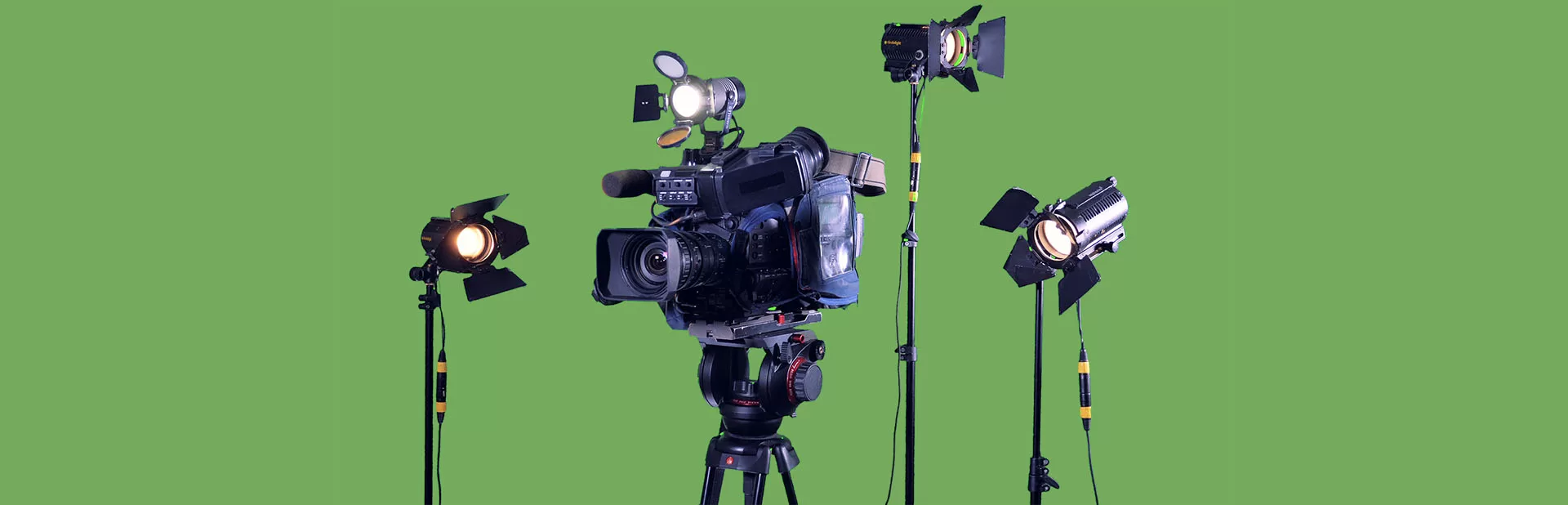
If you have never produced video in a dedicated studio before, the experience is different from what most people expect. It is faster, more controlled, and more comfortable than location shoots. But the rhythm is unfamiliar.
This is what a typical day at a pre-lit studio actually looks like, walked through hour by hour. Specifically, this describes what to expect at San Francisco Green Screen, but the structure applies to most pre-lit studios in the Bay Area.
The Day Before
You will receive a confirmation with the studio address, parking instructions, your studio manager's contact information, and the names of any crew members you will work with. Wi-Fi credentials, restroom locations, and food and beverage options are usually included.
If you have specific equipment requirements (additional cameras, audio gear, gels, props), confirm these the day before. Most studios can accommodate last-minute additions but it is friendlier to flag them in advance.
Hour 1 — Arrival and Setup
The studio manager unlocks the doors at your call time, not when shooting begins. Your rental clock starts the moment the doors are unlocked, so build in buffer time for load-in, talent prep, and any equipment setup.
For most productions, the first hour looks like this: crew arrives, equipment is unpacked, talent gets situated in the green room (hair and makeup if applicable), and the studio manager walks the crew through the studio's lighting board, audio routing, and any production-specific requirements.
If the production includes remote participants — a director on Zoom, a producer dialing in from another office — that connection is tested first. Last-minute video conferencing failures are the most common production day delay, and they are entirely avoidable with a quick test.
Hour 2 — Camera Setup and Test
Even though the lighting is pre-rigged, every production has small adjustments. Maybe the talent is taller or shorter than the standard mark. Maybe the framing is wider than usual. Maybe the green screen needs additional fill for a full-body shot.
The video technician makes these adjustments, locks camera focus and framing, sets audio levels with the talent's lavalier or shotgun microphone, and runs a brief test recording to confirm everything looks right. This is also when teleprompter content is loaded, scrolling speed is set, and any visual reference materials are placed near the camera.
By the end of the second hour, the studio is shooting-ready and the first real takes can begin.
Hours 3-6 — Production
This is the actual production block. Depending on what you are filming, this looks different:
- Executive video: Multiple takes of each talking point or script section. The director may do alternate readings ("more energy," "slower pace," "warmer tone") to give the editor options.
- Multi-subject interviews: Each subject filmed in sequence with brief reset breaks between. The lighting and audio do not need to change, only the subject.
- Branded content: Often involves multiple setups — wide shot, medium shot, cutaways, B-roll. Each setup is a small adjustment, not a full reset.
- Livestream events: The studio is producing live, so the rhythm is different. Pre-show, show, post-show.
Throughout this block, the studio manager handles logistics — coffee refills, parking validations, escalating any technical issues. The crew handles production. Talent does what talent does.
Hour 7 — Lunch (or Equivalent Break)
Most productions schedule a thirty-to-sixty-minute break around the seven-hour mark. This is partly for crew rest, partly for talent reset, and partly because performance suffers without breaks.
Many productions have lunch catered or delivered. The studio's lobby and green room can accommodate small meals.
Hours 8-9 — Pickups and Additional Takes
If anything from the morning needs to be re-recorded, this is when it happens. Often it is small things — one talking point that did not land, an alternate version of an introduction, a B-roll shot that was missed. Sometimes it is bigger — a topic that the executive wants to redo after seeing playback.
This is also when secondary content gets filmed. The main message is in the can, the talent is warmed up, and the studio is humming. It is the most efficient time of the day.
Hour 10 — Wrap
Wrap is faster than setup. The crew packs equipment, the studio manager confirms file delivery, and final logistics are handled. If footage is being delivered to a cloud storage location or external editor, the studio's high-speed internet makes the upload happen during wrap rather than after.
For most productions, the studio is empty within thirty minutes of the last take.
What Surprises First-Time Clients
Three things consistently surprise people the first time they shoot in a pre-lit studio:
How fast the day starts. No spending an hour rigging lights. No troubleshooting why the audio has hum. The studio is production-ready when you walk in.
How quiet it is. Soundproofed studios eliminate the ambient noise that location shoots fight constantly. There is no HVAC hum, no street traffic, no neighboring office noise. The audio is broadcast-clean from the first take.
How comfortable the talent is. Compact studios are intimate. Talent relaxes faster in a four-hundred-square-foot studio than a warehouse-sized stage. The performance is usually better as a result.
Preparing for Your First Studio Day
If you are booking your first studio day, the most important preparation is decisional. Decide what you are filming, who needs to be there, and what success looks like before you arrive. The studio cannot help with that.
Once those decisions are made, the studio takes care of the production. That is the entire point of a pre-lit, fully equipped studio environment.
Build your studio quote in minutes.
Select your dates, package, and add-ons online. Our team reviews every submission and confirms availability quickly.
Build Your Quote →