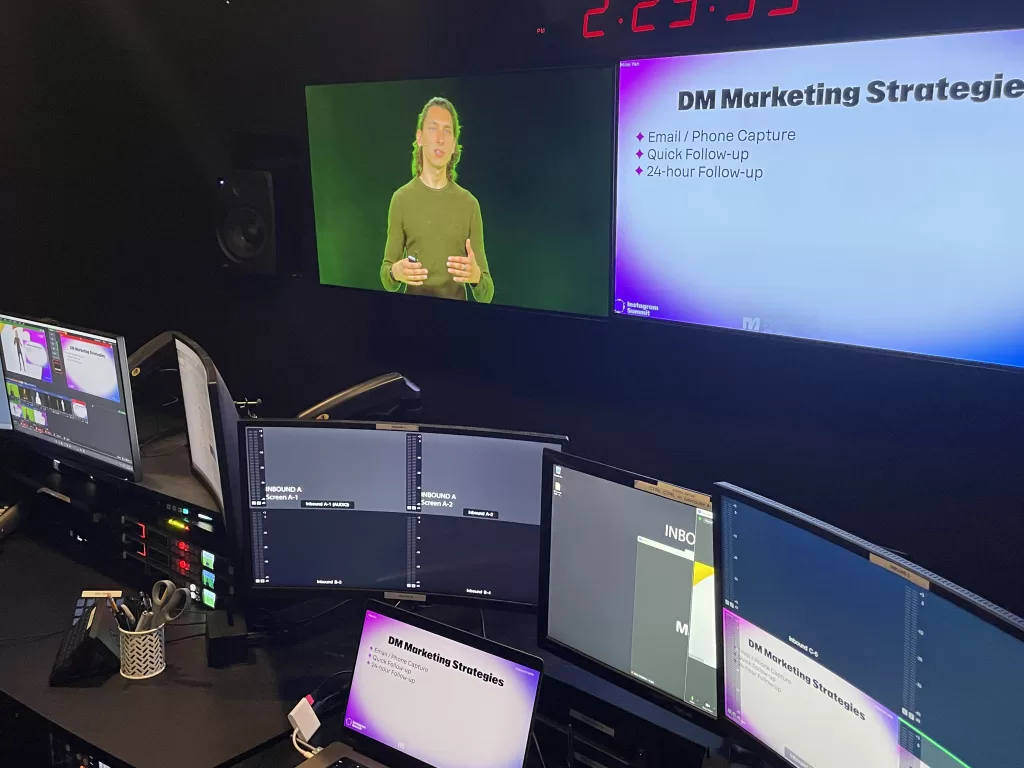
Most executive video shoots fail before the camera rolls. The lighting is fine, the audio is clean, the studio is professional. The problem is the executive.
Not because they are bad on camera. Because no one prepared them properly.
This guide is what we wish every internal communications team and PR firm knew before booking studio time for a CEO, founder, or senior leader. It applies whether you are recording a quarterly all-hands message, an investor update, a media interview, or a brand video.
Two Weeks Before the Shoot
Lock the message
Before anything else, decide what the executive needs to communicate. Not what topic they need to address. The actual message. Three sentences, maximum, that summarize what the audience should walk away believing.
If you cannot write those three sentences, the shoot is not ready to be scheduled. Studio time is expensive, and improvising the message during the shoot wastes everyone's time and money.
Decide on script vs. talking points
For most executives, talking points work better than a full script. A few exceptions: regulatory communications, financial disclosures, and any content where exact language matters legally or politically. For those, use a script and a teleprompter.
For everything else, give the executive five to seven talking points organized by message. Let them deliver in their own voice. The result is more authentic, and the editing is easier because you can pick the best take of each point.
One Week Before
Send the run of show
Executives are busy. They will not memorize a fifteen-page production document. They will read a one-page summary that tells them: when to arrive, what to wear, what to expect, who they will work with, and what the deliverables will be.
Make it scannable. Bullet points, not paragraphs.
Decide on wardrobe
Solid colors film better than patterns. Avoid bright white shirts (they blow out on camera) and pure black (it disappears into shadows). Mid-tone solids in blue, gray, or burgundy work for almost everyone.
If the executive is filming on a green screen, avoid green clothing entirely. This sounds obvious, but it happens.
For accessories: avoid noisy jewelry, busy ties, and reflective surfaces. They look fine to the eye and terrible on camera.
The Day Before
Run a thirty-minute prep session
This is the highest-leverage thirty minutes of the entire production. Read the talking points out loud with the executive. Identify the words they keep stumbling on and rewrite those phrases. Watch how they sit when they are talking — slouching, leaning, hand gestures that will look strange on camera. Note it now, not on shoot day.
For executives who do not film often, this prep session is also when they get over the awkwardness of hearing their own voice and seeing themselves on camera. Better that happens in a conference room than a studio.
Confirm logistics
Arrival time. Address. Parking. Who they should ask for when they walk in. Whether the studio has hair and makeup or whether they need to come prepared. Whether there will be food. These details make the difference between a relaxed executive and a frazzled one.
The Morning Of
Have them arrive thirty minutes before camera time
This is not for makeup or wardrobe. It is for the executive to settle into the environment. The first ten minutes of any shoot are usually the worst takes because the talent is still adjusting. If those ten minutes happen before you start rolling, your first usable take is the first take.
Hair and makeup matters more than executives think
Even executives who never wear makeup benefit from professional makeup for video. Camera-quality lighting reveals oil, redness, and shine that is invisible in normal life. Twenty minutes with a makeup artist transforms how an executive looks on screen.
This applies to men, too. The objection is always "I don't wear makeup." The answer is always "you don't on a normal day, but you also don't sit under three thousand watts of light on a normal day."
Provide water, not coffee
Coffee dries out the mouth and produces noticeable mouth sounds on lavalier microphones. Water keeps the voice clear. This is a small detail that audio engineers care about deeply and that most executives do not think about.
During the Shoot
Get the throwaway take out of the way
Tell the executive that the first take is for camera setup and lighting check. Have them do a full read of the talking points anyway. This relaxes them because the pressure is off, and it usually produces a better take than the second one because they are not yet self-conscious.
Often the throwaway take is the one you use.
Let them watch playback selectively
Some executives are improved by playback. Some are paralyzed by it. Pay attention to which type yours is. If they ask to see playback, show them one good take and one weaker take, then ask them what they noticed. Their self-correction is usually better than your direction.
If they do not ask, do not offer. Watching playback can derail momentum.
Save the most important content for the second hour
Performance peaks in the second hour, after warm-up, before fatigue. Schedule the throwaway content first, the most important content second, and the easier content third.
The Bottom Line
Studio production quality only matters if the executive is ready. Lighting, audio, and camera work are commodities at the high end. Preparation is the variable.
The communications teams that get this right invest in preparation. They write tight messages, run prep sessions, manage logistics carefully, and treat shoot days as serious business operations rather than calendar appointments. The result is video that people actually watch, and executives who are willing to film again.
Build your studio quote in minutes.
Select your dates, package, and add-ons online. Our team reviews every submission and confirms availability quickly.
Build Your Quote →